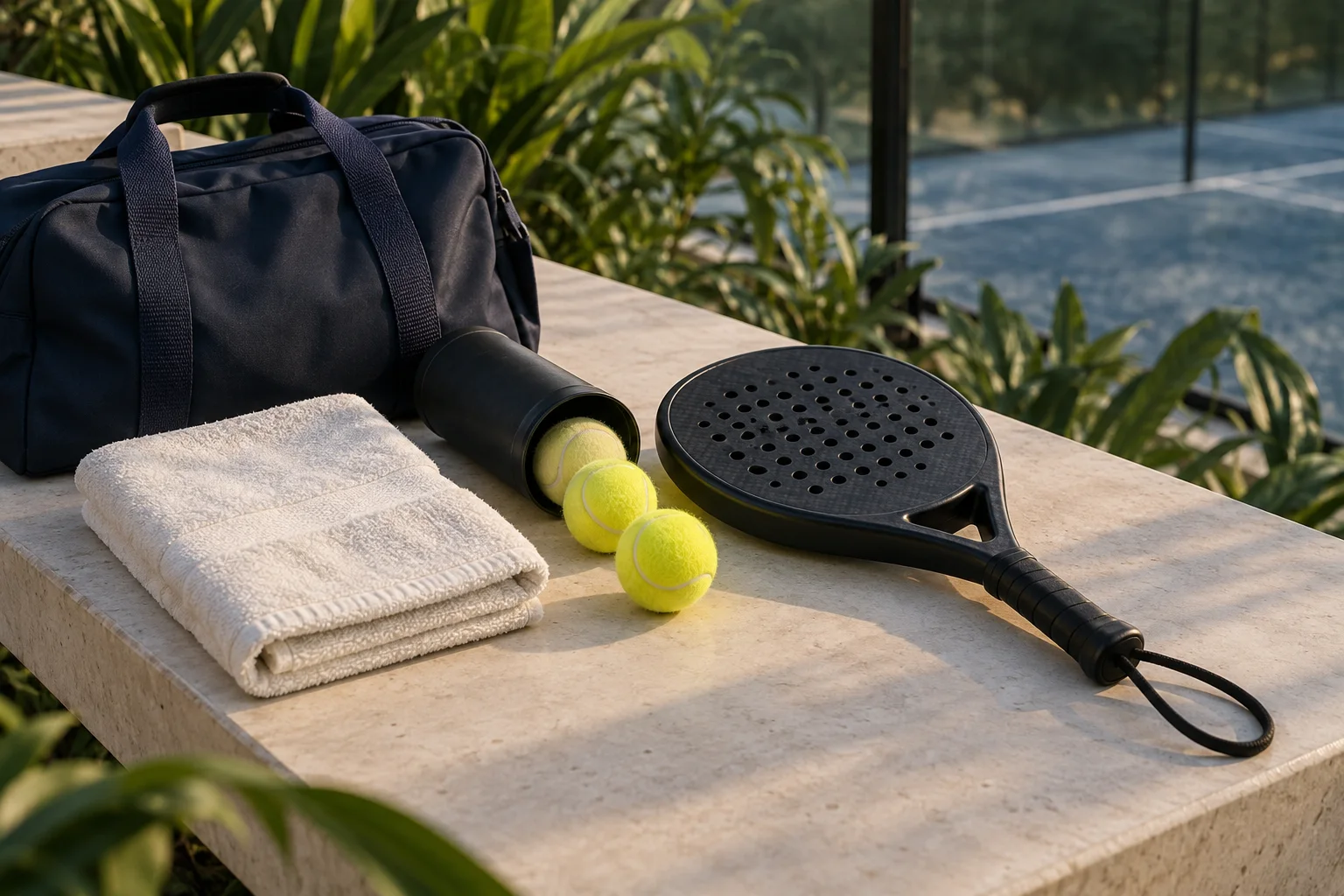
What is padel?
Padel is a doubles racket sport played on an enclosed 20m by 10m court. The court is smaller than a tennis court, the racket is a solid perforated paddle, and the glass walls are part of the game after the ball has bounced. That combination makes rallies easier to start, but it still rewards positioning, patience and teamwork.
Most social padel in Singapore is two against two. You'll share the court with a partner and call for balls in the middle. For a first game, focus on getting a legal serve in, keeping rallies going and letting the glass help you with deep shots.
Padel vs tennis
| Topic | Padel | Tennis |
|---|---|---|
| Court | Enclosed court with glass and mesh; walls become playable after a bounce. | Open court; balls that leave the court boundaries are out. |
| Serve | Underhand after a bounce, at or below waist height, diagonally into the box. | Usually overhand and hit directly from the air. |
| Racket | Solid padel racket, shorter swing, easier contact for beginners. | Stringed racket, larger swing and more technique-dependent contact. |
| Social format | Usually doubles, with frequent partner communication. | Singles and doubles both common. |
Five first-game rules
- Serve underhand. Stand behind the service line, bounce the ball, then hit it diagonally at or below waist level.
- Let the serve bounce. The receiver must let a legal serve land before returning it.
- Use the glass after the bounce. During a rally, the ball may hit your glass after bouncing on your floor; return it before a second bounce.
- Do not hit the opponent's wall first. Your shot must cross the net and land in their court before any wall or fence contact.
- Score like tennis unless told otherwise. Social games may use timed games, golden point or Americano points, so ask before the first serve.
What to wear and bring
Wear breathable sports clothing and court shoes with good grip. Running shoes can slide on artificial turf and make direction changes harder. Bring water, a towel and sun or rain protection if the venue is open-air. Rent a racket for the first few games before buying; most beginners do not yet know whether they prefer control, power or a lighter frame.
Learning options in Singapore
A private lesson gives you individual feedback on footwork, glass defence and serving. Group clinics cost less per player and let you practise with others. At an Americano or beginner social, you rotate partners and opponents. Compare formats in the training guide or browse the coach directory.
Common beginner mistakes
- Swinging too hard: placement and height matter more than power while you are learning.
- Backing up and staying there: learn when to move toward the net after your pair gains control.
- Forgetting the wall: let deep balls rebound from the glass instead of lunging at them too early.
- Silent middle balls: call “mine” or “yours” early so partners do not collide.
- Booking the wrong venue for a first game: prioritise convenient access, rentals and beginner-friendly sessions over views.
Etiquette
Arrive early, warm up cooperatively, call your own faults clearly and return balls to the server without delay. If a call is uncertain in casual play, replay the point. Respect the next booking by leaving the court on time, clearing bottles and returning rental gear.
Plan your first game
- Choose a public or guest-accessible venue from the court directory.
- Ask the venue or organiser about racket rental, balls and the scoring format.
- Book with three patient players, or join a beginner group through community channels.
- Read the rules guide once, then keep the first match friendly and simple.
Beginner FAQ
Can I play padel with no tennis background?
Yes. Tennis experience helps with coordination, but the underhand serve, smaller court and walls make padel approachable for new racket-sport players.
Do I need to buy a racket first?
No. Rent first, then use the gear guide once you know your preferred weight and feel.